Laboratory Melt Spinning Machine for Polymer Fiber Development
News Details
The Crucial Role of Laboratory Melt Spinning in Polymer Fiber Development
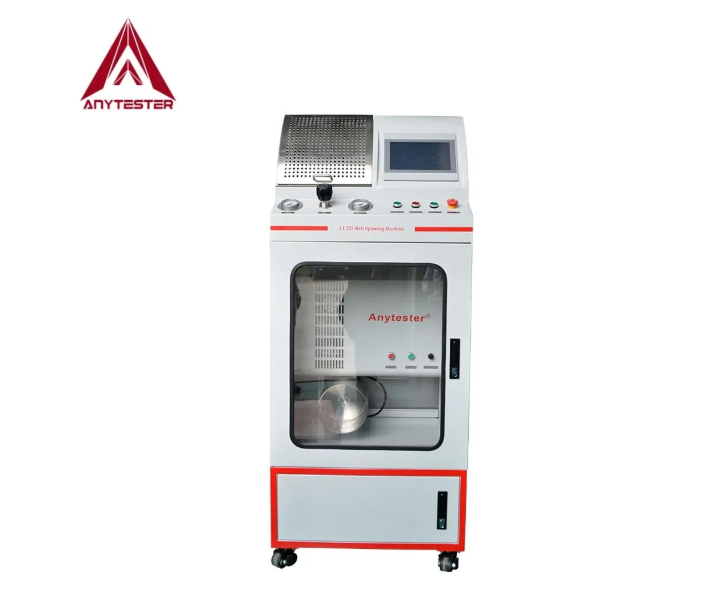
Developing a new synthetic fiber goes far beyond simply selecting the right polymer. Researchers must deeply understand how processing conditions influence the internal structure and overall performance of the final filament. This is precisely why laboratory-scale spinning equipment holds such an indispensable position in polymer and textile research.A lab melt spinning machine allows researchers to produce continuous filaments from thermoplastic polymers under precisely controlled conditions. Rather than relying on a full-scale industrial production line, laboratories can prepare small-volume samples for performance testing and process optimization. This method proves especially valuable when developing novel materials or comparing diverse polymer formulations. Melt spinning is widely applied to process thermoplastic materials such as polyester and polypropylene. The entire process eliminates the need for solvents to dissolve the polymer, making it a practical and efficient choice for investigating synthetic fiber manufacturing and polymer processing technologies.
How Does the Melt Spinning Process Determine Fiber Quality?
In a standard melt spinning workflow, polymer pellets or granules are fed into a heated extrusion system. Once fully melted, the molten material is forced through a spinneret to form fine filaments. These filaments are then cooled, solidified, and collected by a take-up unit. Though the process may seem straightforward, multiple variables play a critical role in shaping the final fiber properties.
Melt temperature
governs how the polymer flows through the extrusion system. An unsuitable temperature can make the melt difficult to process or even cause thermal degradation of the polymer. The ideal temperature setting depends on the specific polymer grade and its unique processing characteristics.Extrusion rate
controls the volume of molten polymer passing through the spinneret within a set time frame. Fluctuations in material flow directly affect filament diameter and spinning stability. Consistent feeding is therefore essential when comparing experimental sample groups.Take-up speed
also exerts a significant influence on fiber formation. A higher winding speed increases the drawing effect on the newly formed filament. Research on melt-spun PLA fibers has demonstrated that adjustments in take-up speed can alter thermal properties, molecular orientation, and overall mechanical performance.Cooling conditions are equally important. The filament must release heat at an appropriate rate to achieve proper solidification. Uneven cooling can cause variations in filament structure, leading to less consistent experimental results. For researchers, precise control over these variables is non-negotiable. It enables them to establish clear correlations between processing parameters and final fiber properties.
Why Is a Laboratory Melt Spinning Machine Preferred for Material Development?
Industrial spinning lines are engineered for large-volume mass production. However, early-stage material research typically requires small sample quantities and highly flexible process adjustments. A laboratory melt spinning machine delivers exactly this practical solution. Researchers can test different polymer grades, compare various formulations, and analyze how process adjustments impact the resulting fibers. For instance, when developing a new polyester or polypropylene formulation, researchers often need to evaluate its melt behavior before committing to commercial production. Laboratory spinning makes it feasible to produce test filaments for in-depth analysis. These samples can then be subjected to additional characterization tests, including tensile testing, thermal analysis, and microscopic inspection. The data obtained helps researchers evaluate fiber strength, elongation, thermal behavior, and structural uniformity. This experimental workflow is highly beneficial for university labs, textile research centers, polymer manufacturers, and companies specializing in the development of functional synthetic fibers.
Key Considerations When Selecting Laboratory Melt Spinning Equipment
Choosing the right equipment involves more than just comparing machine appearance or basic technical specifications. Buyers should first assess the types of polymers they intend to process and the specific fiber sample formats required for their research. Temperature control capability is particularly critical, as different polymers have distinct melting points and processing requirements. The extrusion system should also support reliable material feeding and stable melt delivery. Another important factor is the spinneret configuration. The number, diameter, and design of its holes directly influence the filament formation process. Buyers should verify whether the available spinneret options align with their research objectives. The take-up system deserves equal consideration. It must accommodate the winding conditions required for targeted experiments. Additionally, user-friendly parameter adjustment features can greatly simplify repeated testing procedures. Before making a purchase, laboratories should consult with equipment suppliers regarding material compatibility, processing temperature ranges, extrusion capacity, spinneret options, and available technical support. These details are essential for determining whether a given machine is suitable for a specific research project.
Facilitating More Efficient Polymer Fiber Research
As the development of synthetic fibers continues to advance, laboratory testing remains a vital bridge between material design and industrial-scale production. Researchers rely on dependable equipment to evaluate polymer properties, study spinning behavior, and prepare samples for further analysis. A well-selected lab melt spinning machine provides a controlled and reproducible platform for all these activities. By systematically studying the effects of temperature, material flow, cooling rate, and take-up speed, laboratories can gain deeper insights into fiber formation mechanisms and optimize their experimental workflows. For research institutes and manufacturers exploring new synthetic materials, laboratory melt spinning equipment serves as a valuable starting point for developing and evaluating next-generation fiber technologies.


