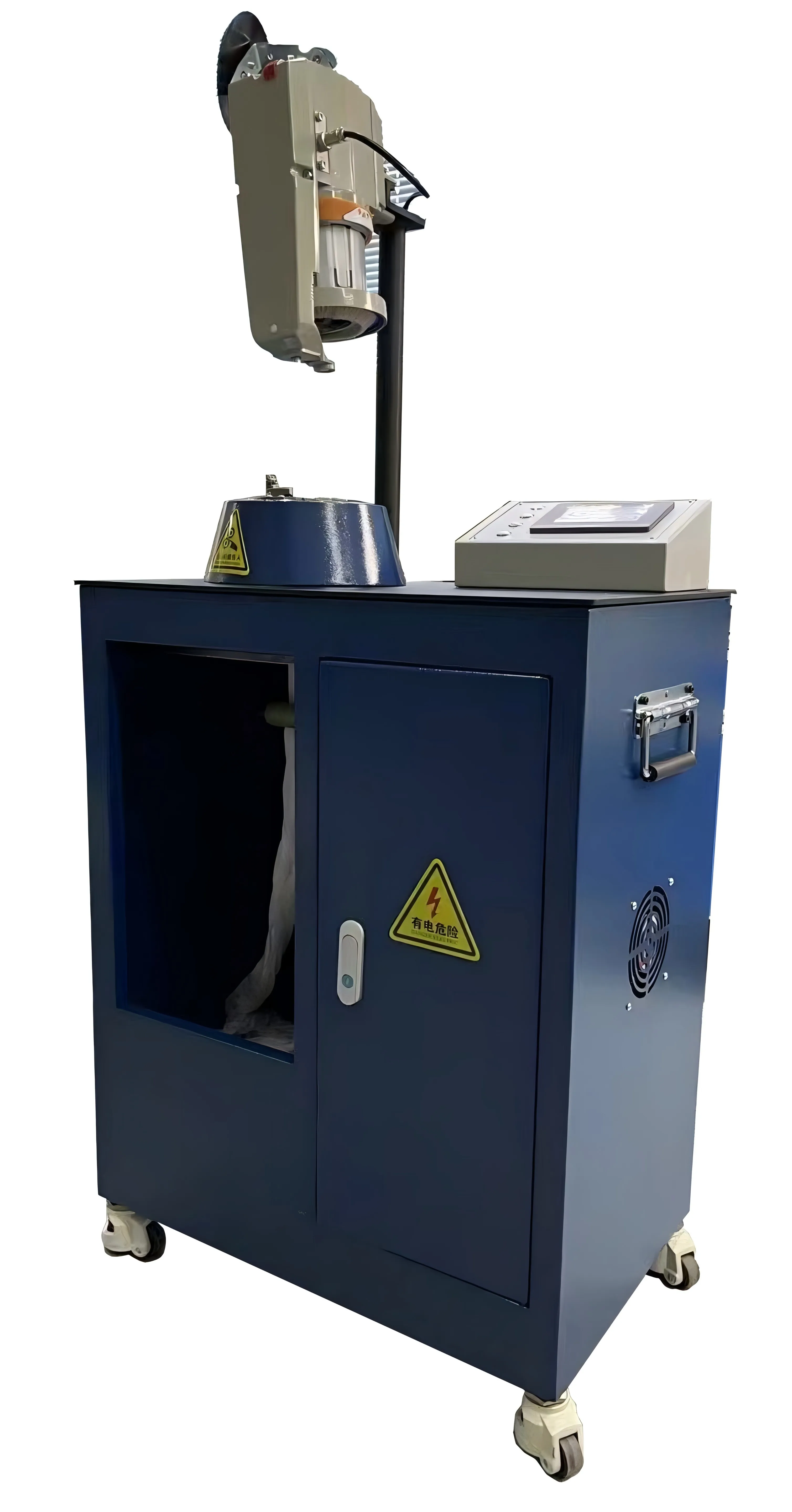
AT250F-III Lab Knitting Machine: Touch Screen Yarn Testing
2150 USD
Product Information
Brand:
Anytester
Model number:
AT250F-III
Minimum Order Quantity:
1
Packing Instructions:
Export Wooden Box


The AT250F-III lab knitting machine is a specialized single-feeder circular laboratory knitting system engineered to knit tubular fabric samples from POY (Partially Oriented Yarn), DTY (Drawn Textured Yarn), and FDY (Fully Drawn Yarn) for the rigorous assessment of yarn uniformity and dyeing affinity. Designed as the flagship model of the AT250F Series, the AT250F-III integrates an intuitive touch screen display, stepless speed regulation from 10 to 300 rpm, a single-phase AC220V 50Hz power supply, an active filament storage feeder, and an automatic knitted fabric tension device. Capable of processing synthetic filaments across a wide fineness range of 25 to 1200 dtex with interchangeable 3.5-inch (89 mm) needle cylinders from 96N to 300N, it eliminates the guesswork in pre-production quality control for chemical fiber plants, dyeing houses, and textile testing laboratories.
Why Pre-Production Sample Knitting Matters in Filament Quality Control
In synthetic fiber manufacturing and industrial knitting mills, hidden yarn defects rarely reveal themselves on the bobbin. Variations in polymer melt viscosity, spinning draw ratios, texturing heater temperatures, or oil pick-up levels during POY, DTY, and FDY production often remain invisible to the naked eye on a wound package. However, once those filaments are knitted into grey fabric and subjected to high-temperature dyeing, minor structural inconsistencies immediately manifest as horizontal barre marks, shade variations, streaks, or uneven loop formations. Discovering these dyeing affinity defects after thousands of meters of fabric have already been produced on full-scale industrial knitting machines leads to costly material scrap, rejected export shipments, and severe production delays.
A dedicated laboratory sample knitting machine bridges the gap between raw filament spinning and bulk textile processing. By knitting standardized tubular fabric sleeves directly from production bobbins and running rapid laboratory dyeing trials, quality assurance teams can grade each yarn batch for dye uptake consistency, filament denier uniformity, and physical loop stability before releasing the lot to the workshop floor or shipping it to downstream customers.
Traditional mechanical sample knitters often introduce their own testing errors due to fluctuating yarn input tension, rigid single-speed motors, or cumbersome multi-phase industrial wiring requirements. The AT250F Series Lab Knitting Machine was developed specifically to overcome these operational bottlenecks. With the introduction of the upgraded AT250F-III Touch Screen Display edition, textile laboratories gain digital control over knitting speed, automated fabric take-down tension, and plug-and-play single-phase electrical compatibility—ensuring that every visual difference on the dyed test sleeve reflects true yarn characteristics rather than machine instability.
Core Advantages of the Flagship AT250F-III Touch Screen Edition
While the AT250F Series includes three configurations (AT250F-I, AT250F-II, and AT250F-III) to suit diverse factory environments, the AT250F-III Touch Screen Lab Knitting Machine stands out as the premier choice for modern quality control laboratories and R&D centers. Every subsystem on the AT250F-III is tailored to maximize repeatability, operator efficiency, and laboratory space utilization.
Interactive Touch Screen Control Interface
Unlike the conventional LED segment displays used on the AT250F-I and AT250F-II models, the AT250F-III features a responsive industrial touch screen human-machine interface (HMI). Operators can set target rotational speeds, monitor real-time rpm, track knitting duration, and execute jog or continuous run commands directly from a clean graphical screen. This digital interface reduces operator training time, prevents parameter entry mistakes when switching between fine and coarse dtex yarn lots, and provides immediate operational feedback during multi-bobbin comparative testing.
Stepless Adjustable Speed from 10 to 300 RPM
Different filament types and fineness ratings respond differently to needle acceleration and loop formation stress. Whereas entry-level machines operate at a fixed speed of 180 r/min, the AT250F-III provides a continuously adjustable running speed ranging from 10 r/min up to 300 r/min. Quality technicians can dial down the speed to 10–60 rpm when threading delicate 25 dtex micro-filaments, inspecting needle latches, or troubleshooting customized POY samples, and then ramp up to 250–300 rpm for high-throughput daily batch screening of standard 75–150 dtex DTY yarns.
Laboratory-Friendly AC220V Single-Phase Power and Compact Footprint
Installing heavy textile testing machinery inside an upper-floor quality testing room or commercial office building often poses infrastructure challenges. Both the AT250F-I and AT250F-II require industrial AC380V 50Hz three-phase power wiring. In contrast, the AT250F-III operates on a standard AC220V 50Hz single-phase power supply, allowing laboratories to plug the unit directly into standard facility electrical circuits without costly three-phase transformer retrofits. Furthermore, the AT250F-III features a streamlined structural footprint of 360 x 560 x 1500 mm (L x W x H) and a stable net weight of 85 kg, saving valuable floor space while maintaining vibration-free operation at 300 rpm.
Integrated Filament Storage and Automatic Fabric Tension Devices
Consistent loop length is the foundation of accurate dyeing affinity evaluation. If yarn feeding tension spikes or fabric take-down tension slackens mid-sample, the resulting density change will absorb dye differently and create a false-positive barre reading. The AT250F-III resolves both variables simultaneously:
- Filament Storage Device: Pre-winds and buffers the incoming filament before it enters the single knitting feeder, smoothing out unwinding tension peaks from the supply package.
- Automatic Knitted Fabric Tension Device: Continuously applies uniform downward take-up force to the knitted tubular sleeve as it exits the 89 mm needle cylinder, guaranteeing uniform stitch density from the first course to the last.
Filament Fineness to Needle Cylinder Selection Guide (25 to 1200 dtex)
Selecting the correct needle count for your target yarn fineness is essential for producing a balanced fabric structure that reveals subtle dyeing variations. All models in the AT250F Series utilize a precision 89 mm (3.5-inch) diameter needle cylinder with a single feeder. By default, the machine ships with a standard 240-needle cylinder installed on the main frame, which is ideally suited for the industry's most common 75 to 150 dtex filaments.
However, because chemical fiber manufacturers test everything from ultra-fine hosiery yarns to heavy industrial filaments, optional interchangeable needle cylinders ranging from 96 needles to 300 needles are available. The table below outlines the engineering relationship between filament fineness (measured in dtex) and the recommended needle cylinder specification:
Procurement Note: The standard configuration includes one 240-needle cylinder mounted on the main machine. If your laboratory tests filaments outside the 75–150 dtex range—or if you require multiple interchangeable cylinders to cover 25 to 1200 dtex—please specify the desired needle counts before placing your order.
Complete Technical Specifications: AT250F-I vs. AT250F-II vs. AT250F-III
To help engineering managers, laboratory directors, and textile procurement specialists compare the three models in the AT250F lineup, the table below presents the complete technical parameters across the AT250F-I, AT250F-II, and the flagship AT250F-III Touch Screen version.
Standard and Optional Configurations
Every AT250F-III Lab Knitting Machine is delivered as a turnkey package ready for immediate commissioning upon unpacking.
Standard Configuration Included with Every Order:
- Main Machine: 1 Set (AT250F-III with integrated touch screen, filament storage feeder, and automatic tension system)
- Standard Needle Cylinder: 1 Piece with 240 needles (pre-installed on the main machine)
- Packing List: 1 Copy
- Quality Certificate: 1 Copy
- User Manual: 1 Copy
Optional Accessories and Spare Consumables:
- Additional Needle Cylinders: 96N, 120N, 144N, 176N, 260N, 280N, or 300N cylinders customized to your dtex testing profile
- Spare Knitting Needles: High-wear-resistance latch needles matched to your cylinder gauge
- Spare Sinkers: Precision sinker sets for smooth loop knocking-over and long-term maintenance
Key Industrial Applications and Testing Workflows
The AT250F-III Touch Screen Lab Knitting Machine serves as a mission-critical inspection instrument across multiple segments of the textile and man-made fiber supply chain:
1. Chemical Fiber Spinning & Texturing Plants (POY / DTY / FDY)
In polyester, polyamide (nylon), and polypropylene spinning mills, hundreds of spinning positions and texturing spindles operate around the clock. By knitting sequential bands from different spindles onto a single continuous tubular sleeve using the AT250F-III, technicians can dye the combined sleeve in one bath and immediately spot rogue spindles exhibiting abnormal dye uptake, oil-stain defects, or draw-tension drift.
2. Knitting Factories & Dyeing Mills Incoming Inspection
Before loading tens of thousands of yarn cones onto high-speed multi-feeder circular or warp knitting machines, knitting mills use the AT250F-III to perform incoming raw material verification. Testing supplier batches in advance prevents cross-lot mixing and allows dyehouse colorists to calibrate dye recipes accurately according to the actual dyeing affinity of the incoming yarn lot.
3. Textile Research Institutes, Universities & Masterbatch Labs
When developing new polymer additives, dope-dyed masterbatches, cationic dyeable polyesters (CDP), or recycled filament blends (rPET), researchers need a compact, low-waste way to convert small experimental yarn bobbins into uniform fabric swatches for spectrophotometric color measurement, wash fastness testing, and physical abrasion grading. The AT250F-III's AC220V single-phase plug and 10–300 rpm speed control make it ideal for academic and R&D laboratory benches.
Frequently Asked Questions (FAQ)
1. What is the main difference between the AT250F-III and the AT250F-I or AT250F-II models?
The AT250F-III is the top-tier model featuring an interactive touch screen display, an adjustable running speed of 10 to 300 r/min, a compact 360 x 560 x 1500 mm frame, and a convenient AC220V 50Hz single-phase power supply. By comparison, the AT250F-I has a fixed speed of 180 r/min with an LED display, and both the AT250F-I and AT250F-II require industrial AC380V three-phase power.
2. Can the AT250F-III test POY, DTY, and FDY yarns on the same machine?
Yes. The AT250F-III is specifically designed to knit fabric samples from DTY (Drawn Textured Yarn), FDY (Fully Drawn Yarn), and POY (Partially Oriented Yarn, customized configuration). If your primary testing involves unstretched POY filaments, please inform our engineering team when ordering so the feeding and tension assembly can be optimized for POY characteristics.
3. How do I choose the right needle cylinder for my yarn fineness (dtex)?
The machine comes standard with a 240-needle cylinder, which covers the mainstream 75 to 150 dtex range. For finer filaments like 25–40 dtex, a 300-needle cylinder is recommended; for heavy filaments such as 350–1000 dtex or 1000–1200 dtex, 120-needle or 96-needle cylinders should be selected. Refer to the Fineness-to-Needle Selection Table above and notify us prior to ordering if you need non-standard cylinders.
4. Why is a filament storage device important on a lab knitting machine?
As yarn unwinds from a conical or cylindrical bobbin at high speed, unwinding tension naturally fluctuates depending on the package diameter and winding angle. The integrated filament storage device decouples package unwinding from the knitting feeder, delivering filament at a constant, low tension so that stitch formation remains uniform throughout the entire test sample.
5. What routine maintenance is required to keep the AT250F-III running reliably?
Daily maintenance involves blowing away lint and fiber fly from the needle cylinder slots, sinker ring, and filament storage feeder using clean compressed air, followed by applying light knitting machine oil to the needle butts and cam track. Keeping spare knitting needles and sinkers on hand ensures zero downtime if a needle latch is damaged during heavy-denier testing.
Upgrade Your Textile Testing Lab with the AT250F-III Today
Eliminate costly dyeing claims, streamline spindle-by-spindle quality audits, and modernize your laboratory workflow with the AT250F-III Touch Screen Lab Knitting Machine. Whether you need the standard 240-needle configuration for daily 75–150 dtex DTY screening or a multi-cylinder package covering 25 to 1200 dtex and customized POY testing, our technical specialists are ready to configure the exact system for your facility.
Pre-Order Configuration Checklist for Procurement Teams
To help our engineering team prepare an accurate quotation and pre-calibrate your AT250F-III before shipment, please share the following details when submitting your inquiry:
- Target Filament Types: Specify whether your laboratory primarily tests DTY, FDY, or requires customized POY feeding integration.
- Fineness Spectrum (dtex): Confirm whether the standard 240-needle cylinder (75–150 dtex) meets your needs or list any additional optional cylinders (96N, 120N, 144N, 176N, 260N, 280N, or 300N) required for finer or heavier yarns.
- Spare Parts Package: Indicate the quantity of spare knitting needles and sinkers needed for your annual laboratory testing volume.
Contact our sales and engineering team today to request an official quotation, discuss custom needle cylinder options, or schedule a technical consultation for your textile testing laboratory.
Recommended products
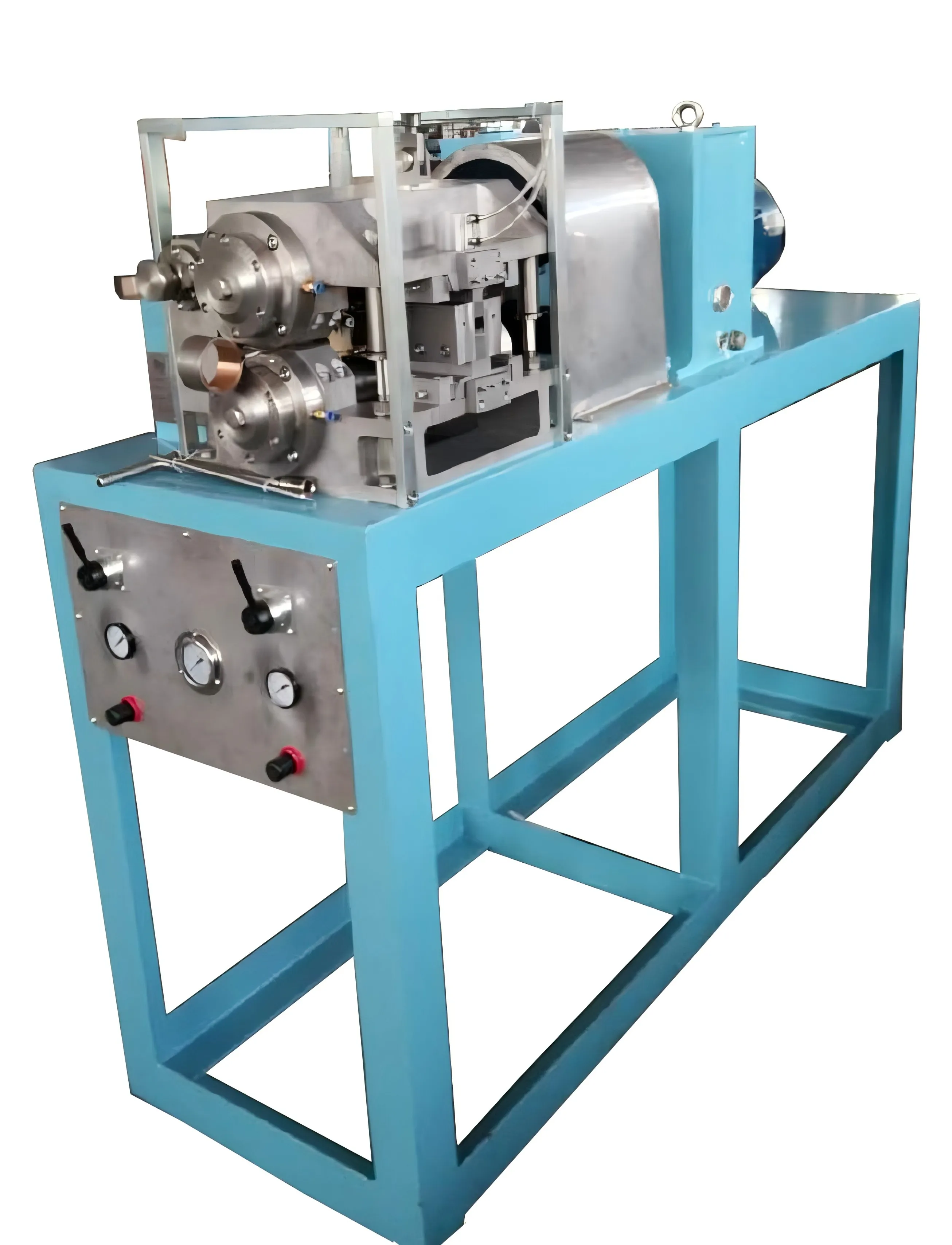
AT229 Rocker Crimper
AT229 Rocker Crimper is a main equipment in the production line specialized in manufacturing differential polyester staple fibers. For cotton-type fibers, the machine continuously feeds polyester tows in even thickness and tension and squeezes them to be of regular crimp through its main pressing and back pressing. In this way, the center line of fibers is not straight any more, but curved; and fibers will have a better cohesive force to meet the requirement of spinning in the later spinning process.
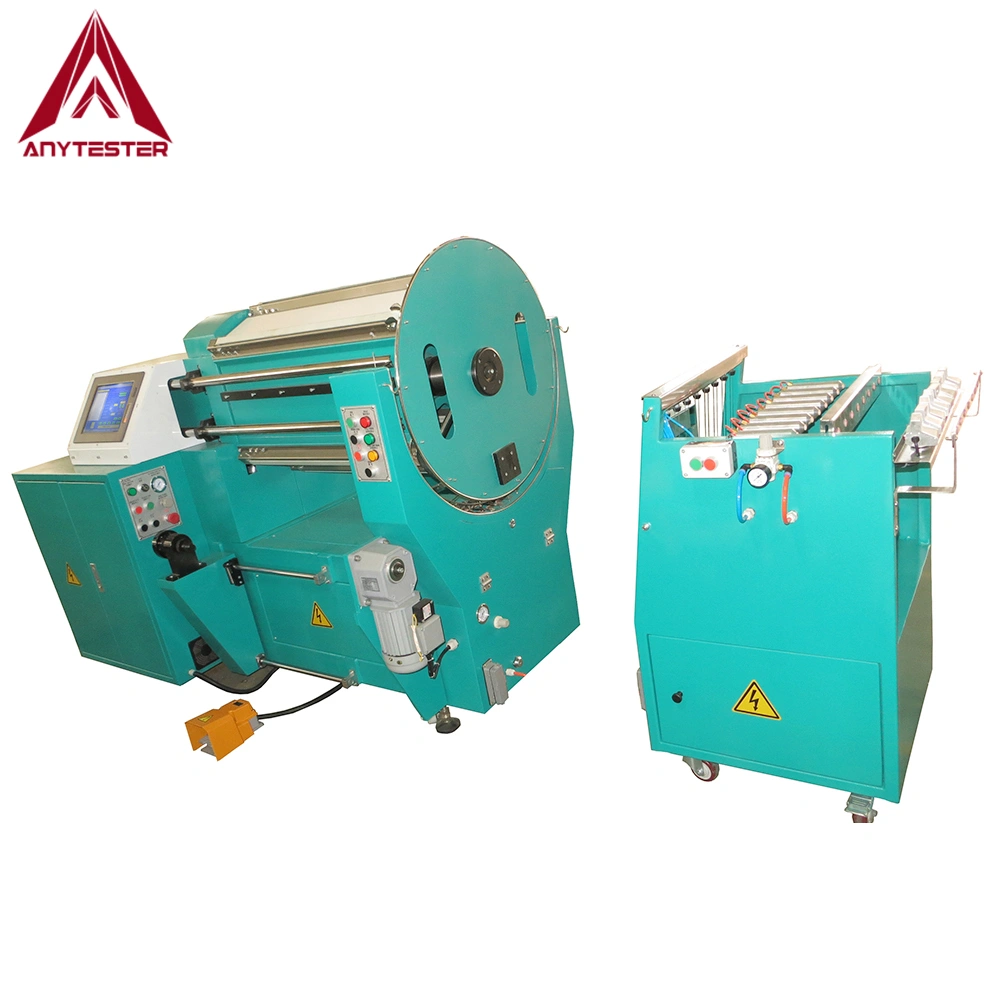
AT241C Yarn Warp Machine Automatic
AT241C Automatic Single Yarn Warping Machine is used for automatic warping of production samples, weaving samples and small - batch fabrics in the laboratory. With the development of the textile industry towards small quantity, diverse types and prompt delivery, our company has developed the AT241C Small Sample Warping Machine in response to the increasing demand for product samples. It is widely used in sampling in industries such as wool spinning, cotton spinning, colored weaving and natural silk, etc.

Z652S Semi-automatic Flat Knitting Machine
Z652S Semi-automatic Flat Knitting Machine is used to knit flat knitted fabric with two driving methods: manual or motor-driven. A programmable controller allows the operator to make a simple program. It is suitable for various kinds of yarns, such as cotton, wool and synthetic fibers; and it can knit various fabrics with different patterns, such as flat, rib, flower turn, twisted rope, mackerel scale pattern, double side, single side, third-class knops, etc.
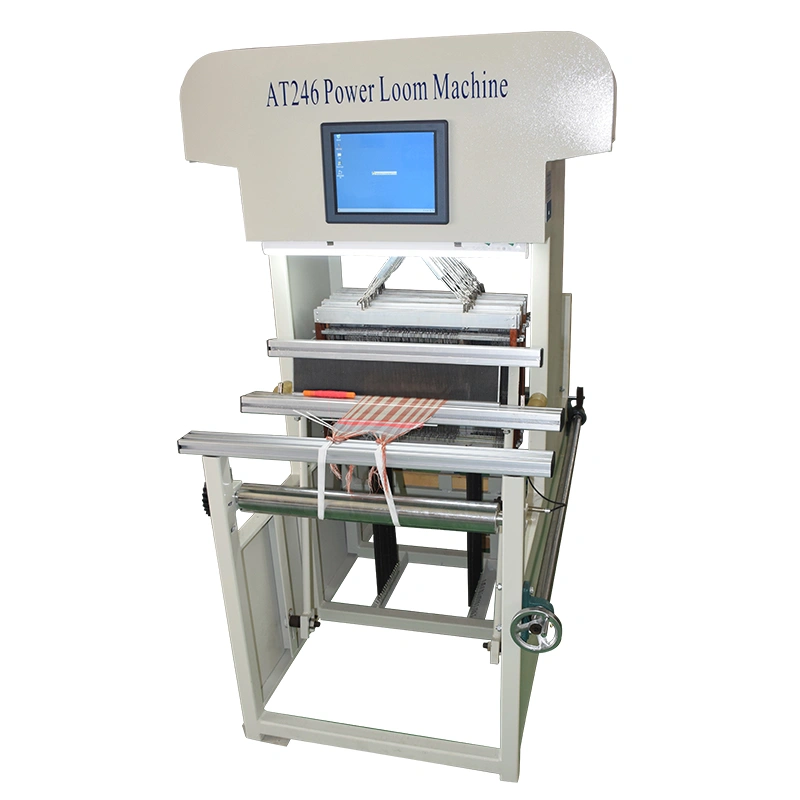
AT246A Lab Scale Semi-Automatic Sample Shuttle Loom
AT246A Semi-automatic Sample Loom is used for sample weaving of all kinds of fabrics, such as cotton, hair, jute, silk, chemical fiber, blending, etc. It consists of shedding mechanism, weft insertion mechanism, beating-up mechanism, take-up mechanism, let-off mechanism, weft selection mechanism, electrical control mechanism, etc. It is widely used in weaving mills, scientific research units, textile institutes and foreign trade companies, etc.


