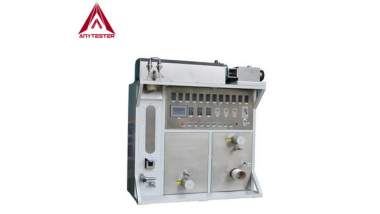
Fiber research demands equipment that delivers consistent results. A lab spinning machine provides that reliability for scientists worldwide. It converts polymer materials into continuous filaments with precision. Researchers use it to study fiber properties and behavior. The technology has become essential in material science laboratories. Furthermore, these systems bridge the gap between theory and production. They replicate industrial spinning at a manageable scale. Small material batches can be tested efficiently. This approach saves both time and resources. It also accelerates the development of new fiber products.
Understanding the Core Technology
A lab spinning machine operates through a melt extrusion process. Polymer granules enter a heated barrel for melting. The molten material then passes through a precisely engineered spinneret. This component determines the final filament diameter. Downstream drawing units stretch and orient the fibers. In addition, temperature control plays a critical role. Each polymer requires a specific processing window. Too much heat degrades the material quickly. Insufficient heating causes uneven flow patterns. Modern systems use multi-zone heating for optimal results. A lab melt spinning machine handles thermoplastic polymers effectively. It processes materials like polypropylene and polyethylene. These polymers melt at temperatures between 160 and 300 degrees Celsius. The equipment maintains stable conditions throughout each run. Consistent temperature ensures uniform fiber quality. Moreover, the take-up system influences final fiber properties. Winding speed directly affects filament orientation and strength. Researchers can adjust this parameter for different applications. Higher speeds typically produce stronger fibers. Lower speeds allow more controlled crystallization.
Applications in Research and Industry
Academic laboratories use these machines for fundamental studies. They investigate how processing affects fiber structure. A spinning lab machine enables systematic parameter variation experiments. Scientists change one variable while holding others constant. This method reveals cause-and-effect relationships clearly. Also, industrial research centers depend on this equipment. They develop new fiber formulations for commercial products. A lab scale melt spinning machine tests material behavior before scale-up. It identifies potential production problems early. Companies avoid costly mistakes in full manufacturing runs. For example, textile manufacturers test new dye formulations. They produce small fiber samples for colorfastness evaluation. The results guide decisions about production processes. Medical device companies develop biocompatible fibers similarly. Each application benefits from precise experimental control. Therefore, the versatility of these systems cannot be overstated. They support projects ranging from clothing to aerospace materials. High-performance fibers often start in laboratory settings. The data collected informs larger production decisions. Research outcomes translate directly into commercial success.
Choosing the Right Equipment
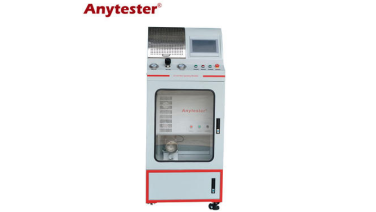
Equipment selection begins with defining research objectives clearly. Throughput requirements determine machine size and capacity. A lab scale melt spinning machine typically handles gram-level samples. This amount suffices for most analytical testing procedures. It also conserves expensive specialty polymers. Similarly, compatibility with existing laboratory infrastructure matters greatly. Power supply requirements need careful verification beforehand. Floor space and ventilation must accommodate the equipment. Ergonomic design improves daily operation comfort. These practical factors affect long-term user satisfaction. Additionally, control system sophistication varies between models. Basic units offer manual parameter adjustment options. Advanced systems feature programmable recipe storage. Touchscreen interfaces simplify complex experiment setup. Data export capabilities support detailed analysis workflows. Consequently, evaluating after-sales support proves essential. Reliable technical service minimizes operational downtime. Training programs accelerate user proficiency development. Spare parts availability ensures uninterrupted research activities. These considerations impact total equipment value significantly.
Future Trends and Innovations
Automation continues transforming laboratory fiber production methods. Integrated sensors monitor every aspect of the spinning process. Real-time data collection enables rapid parameter optimization. Machine learning algorithms suggest improvements automatically. Researchers can focus on interpretation rather than operation. Meanwhile, sustainability concerns drive meaningful innovation. New equipment designs prioritize energy efficiency. Heat recovery systems capture thermal energy from processing. Biodegradable polymer compatibility is becoming standard. These features align with global environmental goals. Furthermore, digital connectivity expands research possibilities dramatically. Remote access allows off-site experiment management. Cloud-based platforms facilitate multi-institution collaboration. Research data can be shared instantly across teams. Geographic barriers no longer limit scientific progress. Finally, the future promises even greater capabilities. Miniaturization will reduce material requirements further. Artificial intelligence will enhance process automation. These advances will make fiber research more accessible. Innovation in lab spinning technology continues unabated.